
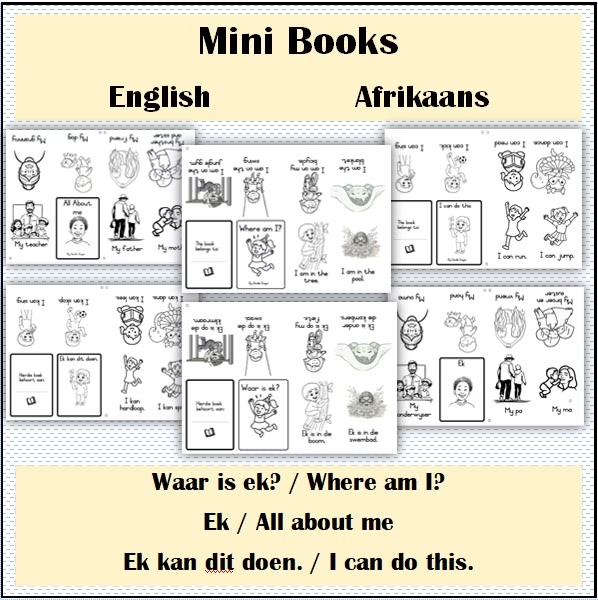
Description
📚 Why Mini Books Are Useful
1. Learner Engagement
- Their small size feels approachable and fun—children love the idea of having their own “little book.”
- Themes, characters, or colorful designs make them more exciting than standard worksheets.
2. Ownership & Motivation
- Learners can take mini books home, collect them, or keep them in personal folders.
- Builds pride and a sense of achievement: “I finished my book!”.
3. Differentiation
- Easy to tailor for different levels—teachers can create versions with simpler text or more challenging activities.
- Great for bilingual classrooms (like your Afrikaans/English resources), since you can print parallel versions.
4. Skill Reinforcement
- Perfect for practicing phonics, sight words, maths facts, or themed content in bite-sized chunks.
- Repetition across mini books helps cement learning without overwhelming learners.
5. Portability & Flexibility
- Small format makes them easy to store, distribute, and carry.
- Can be used during independent work, homework, or even as fast-finisher activities.
6. Cross-Curricular Use
- Mini books can cover stories, maths problems, science facts, or SEL affirmations.
- They’re versatile—teachers can integrate them into almost any subject.
7. Assessment & Tracking
- Teachers can quickly see progress by reviewing completed mini books.
- Learners’ collections become a portfolio of growth over the term.
🌟 For Teachers
Mini books are time-savers: once designed, they can be reused year after year, adapted for themes, and easily printed. They also help manage classroom routines by giving learners a structured, independent task.
👉 In short: Mini books are small in size but big in impact—they combine engagement, practicality, and pedagogy in one neat package.